by: Robi Deslia Waldi
The province of Riau is once again facing a serious threat of forest and land fires (karhutla) in 2026. In response, the local government has officially declared a forest fire emergency alert status as an early preventive measure to reduce the risk of widespread haze disasters that occur almost every year.
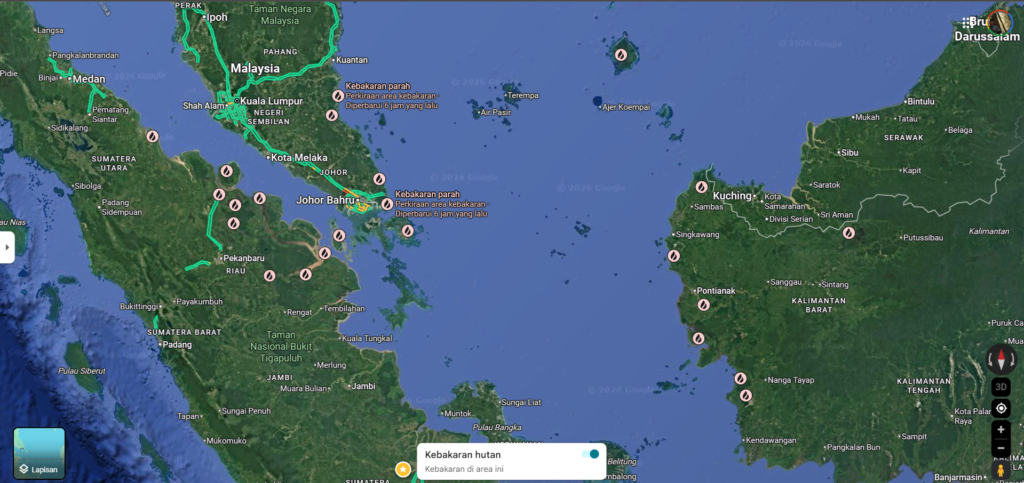
This decision was made following early signs of fire incidents detected in several areas. Satellite-based monitoring shows that fire hotspots are concentrated in specific locations, particularly along the eastern coastal regions of Riau. This distribution indicates that these areas are highly vulnerable to fires, commonly consisting of peatlands and plantation zones.
This situation is particularly concerning because peatlands are highly flammable when dry and extremely difficult to extinguish once ignited. It is therefore not surprising that Riau remains one of Indonesia’s main hotspots for recurring forest and land fires.
In response to the situation, law enforcement authorities have intensified their preparedness. A police spokesperson stated that all regional units have been instructed to increase patrols and surveillance, especially in areas identified as fire-prone. These efforts aim to prevent new fire outbreaks and contain existing ones before they spread further.
This year, the primary focus is on early prevention. The government, along with relevant stakeholders, is strengthening coordination, enhancing hotspot monitoring, and ensuring the readiness of personnel and equipment in the field. This proactive approach is considered more effective than relying solely on firefighting efforts after fires occur.
Forest and land fires in Riau are not a new issue. Every year, these fires cause significant impacts, ranging from public health problems due to haze exposure to disruptions in economic activities and transportation. In some cases, the resulting haze even spreads to neighboring countries.
Most fire incidents are known to be caused by human activities, particularly land clearing through burning. Therefore, in addition to routine patrols, law enforcement plays a crucial role in preventing and controlling forest fires.
With the emergency alert status in place and satellite data indicating a concentration of hotspots in high-risk areas, it is expected that prevention efforts can be carried out more effectively and in a targeted manner. Collaboration between the government, authorities, and the community remains the key to reducing fire risks and preventing a larger haze disaster in 2026.